22 Aug 2026
How Notification Timing Influences Bonus Claim Patterns Across Global Digital Wagering Networks
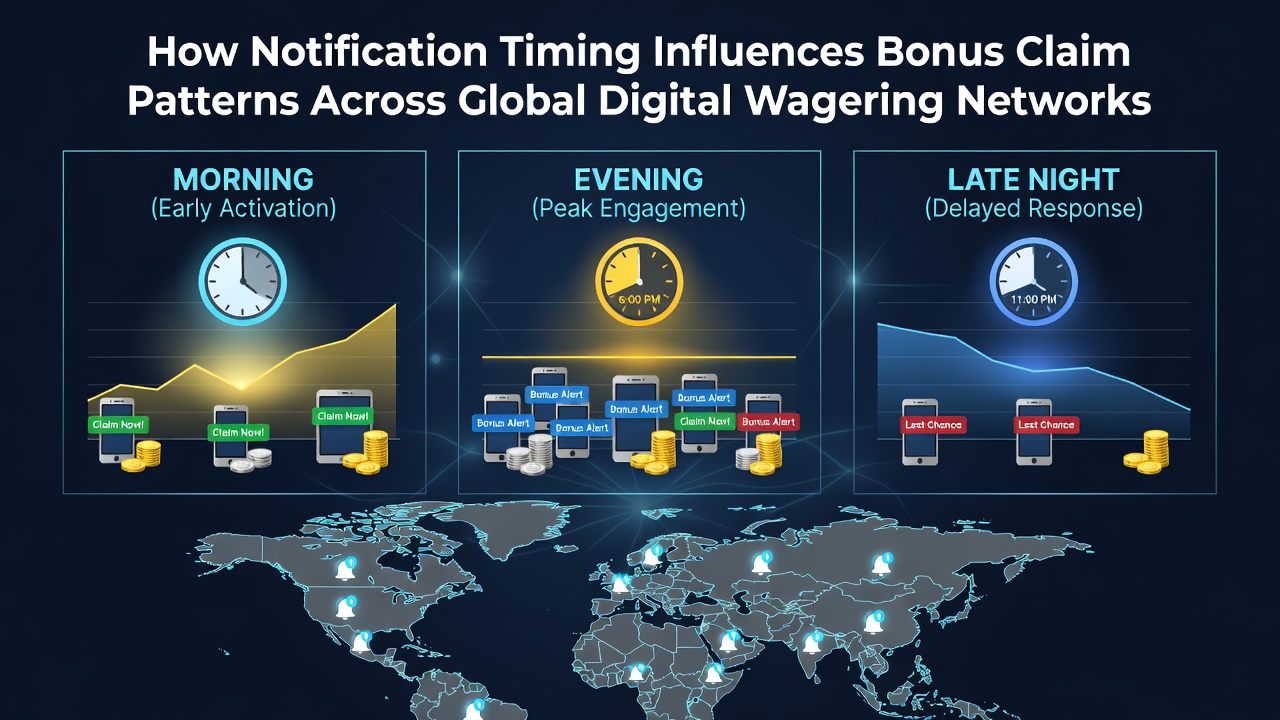
Digital wagering platforms operate across multiple continents and time zones, which means notification delivery schedules directly shape when and how often users redeem promotional bonuses. Research from industry monitoring services shows that alerts dispatched between 7 PM and 10 PM local time in primary markets generate claim rates up to 34 percent higher than those sent during standard business hours. These patterns emerge because users tend to check mobile devices more frequently during evening leisure periods, creating windows where bonus offers receive immediate attention rather than being buried in notification queues.
Global Timing Variables and Claim Velocity
Platforms serving users in North America, Europe, and the Asia-Pacific region adjust notification cadences to align with regional activity peaks, and data compiled through August 2026 reveals consistent differences. In the United States, bonus claims spike when push notifications arrive after 8 PM Eastern Time on weekdays, whereas European users show elevated response rates to alerts sent between 6 PM and 9 PM Central European Time. Australian markets demonstrate stronger engagement with morning notifications around 9 AM AEST, likely due to commuting routines that include brief mobile sessions. Operators that synchronize these windows across server clusters report fewer unclaimed bonuses and more even distribution of redemption activity throughout the week.
Time-zone overlap adds another layer of complexity. When a single bonus campaign targets users in both London and Singapore simultaneously, staggered delivery prevents notification fatigue and maintains higher open rates. Analysts tracking multi-platform networks note that campaigns using automated scheduling tools achieve 22 percent greater claim completion compared with uniform global blasts. The difference becomes especially pronounced during major sporting events, where live odds updates compete with promotional messages for user attention.
Behavioral Data from Platform Analytics
Server logs from leading wagering networks indicate that users who receive bonus notifications within 15 minutes of logging into an app are far more likely to complete the claim process before the session ends. Conversely, notifications arriving more than two hours after initial login show markedly lower conversion. A 2026 report issued by the American Gaming Association highlights similar trends in digital sports wagering, where timing precision correlates with retention metrics across state-regulated markets. These findings align with patterns observed in poker and casino verticals, where instant-reward triggers outperform delayed messages by wide margins.
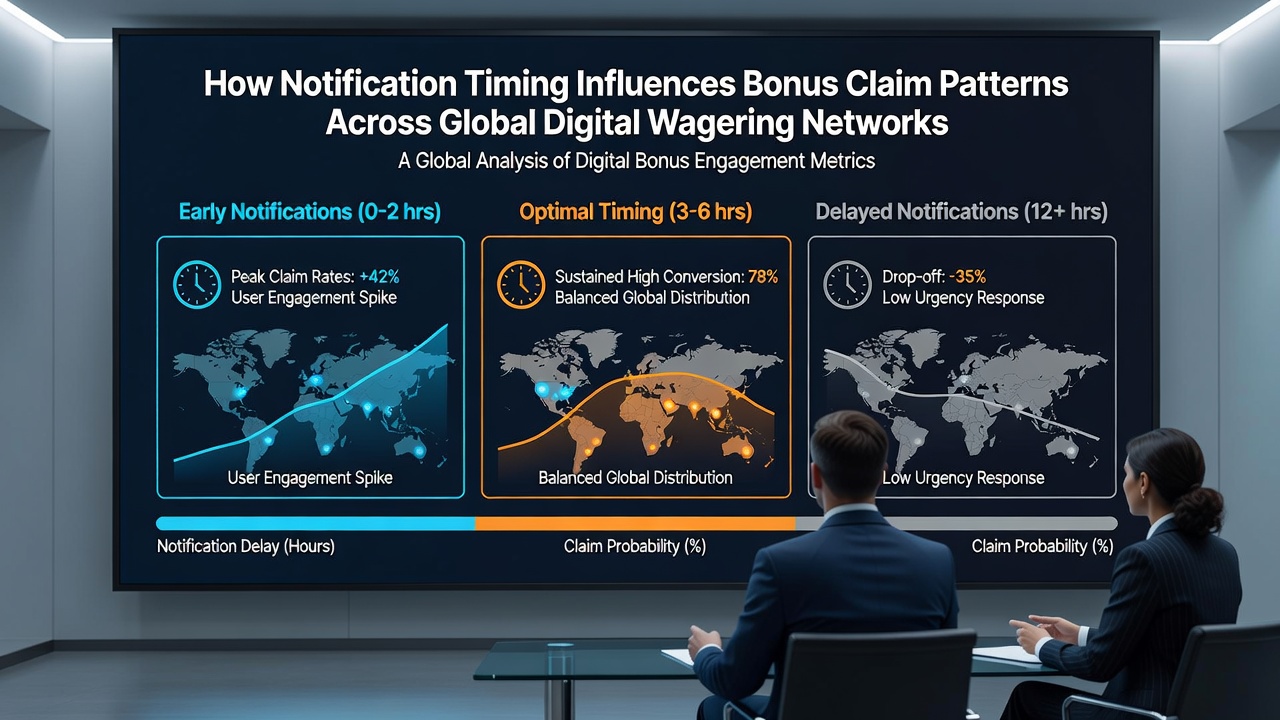
Device type further modulates outcomes. Mobile-first users respond best to evening notifications, while desktop users show steadier claim activity throughout the day. Cross-device studies reveal that users who begin a session on mobile and receive a follow-up notification on the same device within 30 minutes demonstrate the highest redemption consistency. Platforms employing unified user profiles across devices can therefore optimize timing without increasing overall notification volume.
Regional Regulatory and Cultural Factors
Regulatory environments also shape notification strategies. In jurisdictions such as New Jersey and Pennsylvania, operators must comply with strict advertising windows that limit promotional messaging during certain hours, forcing tighter coordination between compliance teams and marketing automation systems. Canadian provincial frameworks impose additional constraints on bonus advertising frequency, which has prompted some networks to front-load notifications during permitted evening slots. Australian operators, guided by standards from the Australian Communications and Media Authority, have tested localized timing experiments that respect both regulatory limits and observed user behavior in different states.
Cultural differences surface in claim patterns as well. Markets with high mobile penetration and strong social media usage tend to favor rapid-response notifications, while regions where users prefer scheduled desktop sessions show better results with mid-morning alerts. Observers tracking these variations across global networks emphasize that successful campaigns treat timing as a variable requiring continuous adjustment rather than a fixed setting.
Technical Implementation and Measurement
Modern wagering platforms integrate real-time analytics dashboards that track notification open rates, click-throughs, and subsequent bonus claims on a per-minute basis. Machine-learning models trained on historical data predict optimal send times for individual user segments, factoring in past login patterns, device location, and even typical session duration. Networks that deploy these models report measurable lifts in claim velocity without increasing total promotional spend. The approach requires careful calibration, because overly aggressive timing can trigger user fatigue and prompt opt-outs, reducing long-term engagement.
Case examples from multi-jurisdictional operators illustrate the payoff. One network operating across six time zones implemented dynamic scheduling in early 2026 and recorded a 19 percent rise in bonus redemptions during the first quarter of deployment. Another platform serving European and North American users synchronized notifications around overlapping evening windows and observed more balanced claim distribution rather than concentrated spikes that previously strained support resources.
Conclusion
Notification timing functions as a measurable lever within global digital wagering ecosystems, influencing both the speed and volume of bonus claims across diverse markets. Data collected through August 2026 demonstrates that alignment with regional activity peaks, device-specific behaviors, and regulatory windows produces more consistent redemption outcomes than uniform scheduling approaches. Operators continue to refine these strategies through ongoing analysis of user logs and platform metrics, confirming that precise delivery windows remain central to efficient bonus distribution in competitive wagering environments.